четверг, 20 июня 2019 г.

21,06,2019


Electric cars: everything you need to know
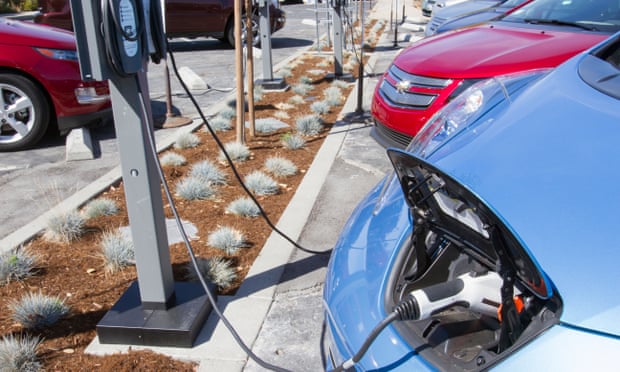
HOW WILL I CHARGE AN ELECTRIC CAR?

The first generation of electric-car buyers have been people with homes where it is easy to plug one in. 
Dunsmore envisages charging points becoming ubiquitous at workplaces, and at shopping centres, railway stations, hotels and cinemas. For longer journeys, rapid chargers that can recharge a car’s battery in 30 minutes will increasingly proliferate across motorway service stations and at conventional refuelling stations.

I’M WORRIED ABOUT THE BATTERY RUNNING OUT – SHOULD I BE?

Most mass market electric cars today have a range of 100-150 miles before the battery runs flat. Some of the top-end cars, such as Tesla’s electric sports cars, can run for 334 miles before needing a plug socket.
While that may not sound much compared to the 400-500 miles or more that a petrol or diesel car can manage before refilling, most car journeys in the UK would easily be accomplished in an electric car. Half of journeys are one to five miles; 38% are for five to 25 miles and only 2% are for 50 miles and more.
Of course, some people will need to go much further – and that’s where plug-in hybrids come in, using a petrol engine to run an electric motor after the battery runs out.
Improving battery technology is expected to extend even pure electric cars’ ranges to about 400 miles within a decade.

DON’T THE BATTERIES DIE AFTER A FEW YEARS?

Makers of electric cars sell their models with a warranty for the battery, which will lose capacity over time. In the case of the Nissan Leaf, it’s covered for five years or 60,000 miles, rising to eight years or 100,000 miles for the version with a bigger battery. But yes, eventually you will need to either buy a new battery – by which time their cost should have fallen – or sell the car on.
Electric cars have been around long enough in the UK for a second-hand battery market to be emerging. One energy company, Eaton, is already selling used electric batteries for reuse as household batteries.


вторник, 18 июня 2019 г.


Electric cars: everything you need to know

HOW WILL I CHARGE AN ELECTRIC CAR?

The first generation of electric-car buyers have been people with homes where it is easy to plug one in. 
Dunsmore envisages charging points becoming ubiquitous at workplaces, and at shopping centres, railway stations, hotels and cinemas. For longer journeys, rapid chargers that can recharge a car’s battery in 30 minutes will increasingly proliferate across motorway service stations and at conventional refuelling stations.

I’M WORRIED ABOUT THE BATTERY RUNNING OUT – SHOULD I BE?

Most mass market electric cars today have a range of 100-150 miles before the battery runs flat. Some of the top-end cars, such as Tesla’s electric sports cars, can run for 334 miles before needing a plug socket.
While that may not sound much compared to the 400-500 miles or more that a petrol or diesel car can manage before refilling, most car journeys in the UK would easily be accomplished in an electric car. Half of journeys are one to five miles; 38% are for five to 25 miles and only 2% are for 50 miles and more.
Of course, some people will need to go much further – and that’s where plug-in hybrids come in, using a petrol engine to run an electric motor after the battery runs out.
Improving battery technology is expected to extend even pure electric cars’ ranges to about 400 miles within a decade.

DON’T THE BATTERIES DIE AFTER A FEW YEARS?

Makers of electric cars sell their models with a warranty for the battery, which will lose capacity over time. In the case of the Nissan Leaf, it’s covered for five years or 60,000 miles, rising to eight years or 100,000 miles for the version with a bigger battery. But yes, eventually you will need to either buy a new battery – by which time their cost should have fallen – or sell the car on.
Electric cars have been around long enough in the UK for a second-hand battery market to be emerging. One energy company, Eaton, is already selling used electric batteries for reuse as household batteries.


четверг, 30 мая 2019 г.

31.05.2019


What solutions can you think of to the following problem?
It is midday in the west Austrian village of Rattenburg and the bright blue skies overhead, but the inhabitants of the town are squinting in the unworldly twilight. The cause is Stadtberg, a 2,650 ft limestone mountain covered in dense pine forest that stands to the immediate south of the village and completely blocks the low winter sun as it tracks from east to west along the length of the village.
From mid-November to mid-February the village sits permanently in shadow. The result is an all-pervading seasonal gloom that Rattenburg’s leaders argue strikes down its citizens with winter depression and threatens their economic future by driving inhabitants and tourist away.


четверг, 23 мая 2019 г.

24.05.2019

Bat, bet.
Capped, kept. Jam, gem. Tack, tech. Rack, wreck.

Most, the most

We use most with nouns to mean ‘the majority of’


She plays tennis most mornings.

Most tap water is drinkable.

When we are talking about the majority of something in general, we use most + noun. When we are talking about the majority of a specific set of something, we use most of the + noun.

Compare
Most desserts are sweet.
Desserts in general
The food at the party was delicious. He’d made most of the desserts himself.
A specific set of desserts (at the party)
 When we use most before articles (a/an, the), demonstratives (this, that), possessives (my, your) or pronouns (him, them), we need of:
Most of the information was useful. Some of it wasn’t relevant.
Not: Most the information …
Warning:
When there is no article, demonstrative or possessive pronoun, we don’t usually use of:
There hasn’t been much rain. Most rivers are below their normal levels.
Not: Most of rivers are below their normal levels.
We use most of before geographical names:
[from a weather forecast]
Most of England and Wales should be dry throughout the day

We can leave out the noun with most when the noun is obvious:
[talking about school lunches]
Some children brought a packed lunch but most had a cooked meal in the canteen.(most children)

THE MOST

The most is the superlative form of many, much. We use the most with different classes of words.

The most with adjectives and adverbs

We use the most to make the superlative forms of longer adjectives and the majority of adverbs:
They’re using the most advanced technology in the world. (+ adjective)
[the Lake District is an area in Britain]
Scafell Pike is the most easily identifiable peak in the Lake District. (+ adverb)

The most with a noun

We use the most with a noun to mean ‘more/less than all of the others’:
Ian earns the most money in our family.
We can leave out the noun when it is obvious:
He didn’t tell the best jokes but he told the most. (the most jokes)

The most with a verb

We use the most with a verb as an adverb:
They all cried, but Claire cried the most.
https://www.learnenglishfeelgood.com/esl-more-most-themost1.html