понедельник, 8 июля 2019 г.


четверг, 4 июля 2019 г.
05,07,2019 (1500)
Forget to Do
Use forget to do to indicate that someone did not do something:
She often forgets to lock the door when she leaves the house.
I forgot to get the groceries at the supermarket.
Forget Doing
Use forget doing to say that someone doesn't remember something that they have done in the past:
Mary forgets meeting Tim in Italy.
Annette forgot locking the door before she left her home.
Remember to Do
Use remember to do when speaking about something someone should do:
Make sure you remember to pick up some eggs at the supermarket.
I'm sure I'll remember to invite Peter to the party. Don't worry about it!
Remember Doing
Use remember doing to speak about a memory that someone has:
I remember buying him a present.
Jeff remembers living in Italy like it was yesterday.
Regret to Do
Use regret to do in the case that someone must do something that is unpleasant:
I regret to tell you the bad news
They regret to inform us that we've lost all our money!
Regret Doing
Use regret doing to express that someone doesn't like what they did at some time in the past:
Peter regrets moving to Chicago.
Allison regrets falling in love with Tim.
Stop to Do
Use stop to do in order to say that someone stops one action in order to do another action:
Jason stopped to speak with his boss about the convention.
My friend stopped to smoke a cigarette before he continued with the conversation.
Stop Doing
Use stop doing to show that someone has completely quit some action. This form is often used when speaking about bad habits:
I stopped smoking cigarettes.
You should stop complaining about money all the time.
Try to Do
Use try to do to encourage someone to do something:
He should try to learn a new language.
I think you should try to save some money this month.
Try Doing
Use try doing when speaking about an experiment or something that is new:
He tried going to a fitness club, but it didn't work out for him.
Have you ever tried cooking fish in olive oil?
Infinitive or Gerund Quiz
Test your understanding of these differences in meaning by deciding whether the verb should be used in the infinitive or gerund form based on the clues provided:
- Jack remembers _____ (buy) eggs at the supermarket because he always takes a list.
- Jason stopped _____ (play) the piano at six because it was time for dinner.
- I certainly didn't forget ___________ (ask) him the question because he's already given me his answer.
- Janice stopped _____ (make) a telephone call before she continued with her shopping.
- What's the worst thing you regret _____ (do) in your life?
- Have you ever forgotten _____ (get) a present for your wife on your anniversary?
- Alan stopped _____ (drink) years ago because of a serious liver problem.
- I regret _____ (tell) you that we are going out of business next month.
- I remember ______ (play) football when I was in high school. Unfortunately, I didn't play much during the games.
- I don't think I'll ever regret _____ (fall) in love with my wife. We've been married for over thirty years!
воскресенье, 30 июня 2019 г.
четверг, 27 июня 2019 г.


четверг, 20 июня 2019 г.
21,06,2019
Electric cars: everything you need to know
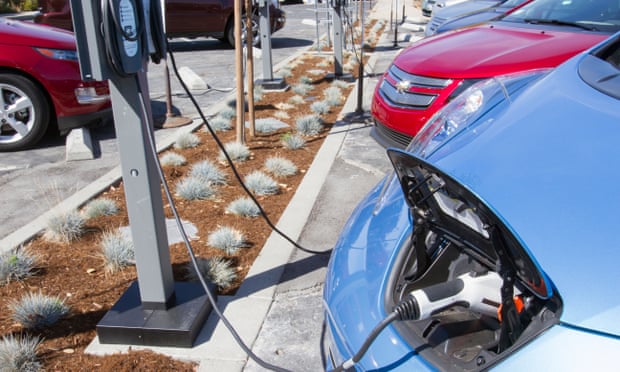
HOW WILL I CHARGE AN ELECTRIC CAR?
The first generation of electric-car buyers have been people with homes where it is easy to plug one in.
Dunsmore envisages charging points becoming ubiquitous at workplaces, and at shopping centres, railway stations, hotels and cinemas. For longer journeys, rapid chargers that can recharge a car’s battery in 30 minutes will increasingly proliferate across motorway service stations and at conventional refuelling stations.
I’M WORRIED ABOUT THE BATTERY RUNNING OUT – SHOULD I BE?
Most mass market electric cars today have a range of 100-150 miles before the battery runs flat. Some of the top-end cars, such as Tesla’s electric sports cars, can run for 334 miles before needing a plug socket.
While that may not sound much compared to the 400-500 miles or more that a petrol or diesel car can manage before refilling, most car journeys in the UK would easily be accomplished in an electric car. Half of journeys are one to five miles; 38% are for five to 25 miles and only 2% are for 50 miles and more.
Of course, some people will need to go much further – and that’s where plug-in hybrids come in, using a petrol engine to run an electric motor after the battery runs out.
Improving battery technology is expected to extend even pure electric cars’ ranges to about 400 miles within a decade.
DON’T THE BATTERIES DIE AFTER A FEW YEARS?
Makers of electric cars sell their models with a warranty for the battery, which will lose capacity over time. In the case of the Nissan Leaf, it’s covered for five years or 60,000 miles, rising to eight years or 100,000 miles for the version with a bigger battery. But yes, eventually you will need to either buy a new battery – by which time their cost should have fallen – or sell the car on.
Electric cars have been around long enough in the UK for a second-hand battery market to be emerging. One energy company, Eaton, is already selling used electric batteries for reuse as household batteries.

вторник, 18 июня 2019 г.
Electric cars: everything you need to know
HOW WILL I CHARGE AN ELECTRIC CAR?
The first generation of electric-car buyers have been people with homes where it is easy to plug one in.
Dunsmore envisages charging points becoming ubiquitous at workplaces, and at shopping centres, railway stations, hotels and cinemas. For longer journeys, rapid chargers that can recharge a car’s battery in 30 minutes will increasingly proliferate across motorway service stations and at conventional refuelling stations.
I’M WORRIED ABOUT THE BATTERY RUNNING OUT – SHOULD I BE?
Most mass market electric cars today have a range of 100-150 miles before the battery runs flat. Some of the top-end cars, such as Tesla’s electric sports cars, can run for 334 miles before needing a plug socket.
While that may not sound much compared to the 400-500 miles or more that a petrol or diesel car can manage before refilling, most car journeys in the UK would easily be accomplished in an electric car. Half of journeys are one to five miles; 38% are for five to 25 miles and only 2% are for 50 miles and more.
Of course, some people will need to go much further – and that’s where plug-in hybrids come in, using a petrol engine to run an electric motor after the battery runs out.
Improving battery technology is expected to extend even pure electric cars’ ranges to about 400 miles within a decade.
DON’T THE BATTERIES DIE AFTER A FEW YEARS?
Makers of electric cars sell their models with a warranty for the battery, which will lose capacity over time. In the case of the Nissan Leaf, it’s covered for five years or 60,000 miles, rising to eight years or 100,000 miles for the version with a bigger battery. But yes, eventually you will need to either buy a new battery – by which time their cost should have fallen – or sell the car on.
Electric cars have been around long enough in the UK for a second-hand battery market to be emerging. One energy company, Eaton, is already selling used electric batteries for reuse as household batteries.


Подписаться на:
Сообщения (Atom)