вторник, 26 марта 2019 г.
27.03.2019

вторник, 19 марта 2019 г.
20.03.2019
p 6
bring about change
We can use about to mean ‘concerning’
- I have heard all about it.
We can use about to mean ‘approximately’. We can also use around for this but about is less formal.
- About six hundred people were present.
We can use How about and What about to make suggestions.
- What about asking Tom?
About can mean ‘here and there’.
- She is always out and about.
- They go about interviewing the public.
Just about means ‘almost’.
- I have just about finished.
- I have had just about enough of him and his patronizing tone.
- The money we get will just about pay for the new equipment.
Be about to means that something is on the point of happening.
- I am about to change jobs.
- He is about to give in his resignation.
- Please listen carefully. i am about to say something important
Here are some useful expressions using about
no doubt about
- There is no doubt about his ability but he doesn’t work well with other people
bring about change
- We need to bring about change quickly or the company will go bankrupt.
anything I can do about it?
- Is there anything I can do about my financial situation?
concerned about
- i’m concerned about Simon. He is acting very strangely.
speculate about
- We can only speculate about what happened. We will never know for sure.
about to change
- I am not happy with what has been happening. I must warn you that things are about to change around here.
| to bake | to cook in an oven without extra fat, especially bread, cakes, pastries. a baker | 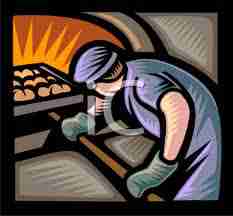 |
| baked potatoes |
| to roast | to cook, especially meat, in an oven or over a fire. to roast | 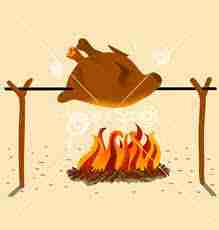 |
| to roast coffee beans |
| to boil | to cook in boiling water (100 °C) | 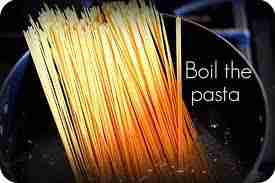 |
| to boil down To cook pasta put them in boiling water and stir. If you don't stir during the first moments of cooking they will stick together. to stir to stick |
| to fry | to cook food in hot oil, or fat To cook chips (French fries US) you use a deep fryer. You fry a steak in a frying-pan. A steak can be cooked 'rare' 'medium' or 'well done' |  | 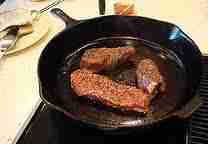 |
| to steam | to cook food by heating it in the steam from boiling water | 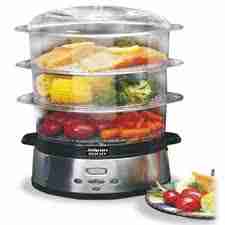 |
| The most healthy way to prepare vegetables is to steam them. To steam vegetables you can use a steaming basket over boiling water. (a container with holes on the bottom) or a steam cooker |
| To simmer | to cook something slowly in hot liquid kept at or just below the boiling point.(85 °C / 95 ° C) | 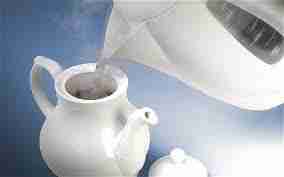 |
| to make tea pour simmering water over the tealeaves. |
| to poach | to cook an item by submerging it in a liquid that is just bareley simmering.(75 °C / 85 °C) | 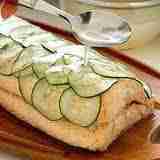 |
| The easiest way to prepare delicious salmon steaks or fillets is to poach them in white wine seasoned with fresh dill. to season dill |
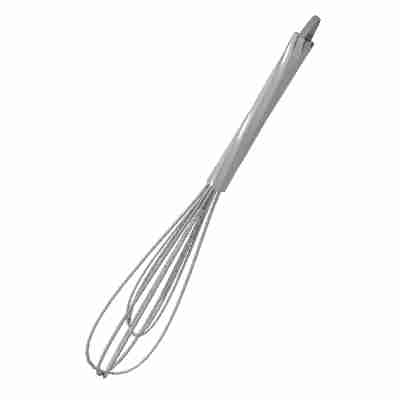 |  | 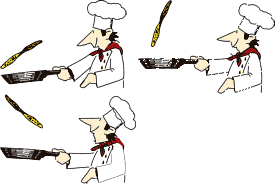 |
| to whisk | to stir-fry | to flip over |
| How to cook an egg ? |
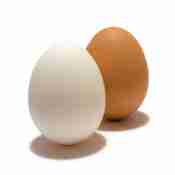 |
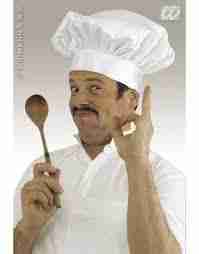 | According to the legend the 100 folds of the chef's hat (toque) are said to represent the many different ways he knows to cook an egg. I don't know if there are really 100 different ways to cook an egg but you can read below some of these ways. An egg contains a yolk and a white enclosed in a shell. yolk shell |
| A hard-boiled egg | A soft-boiled egg in an eggcup | A poached egg | A scrambled egg |
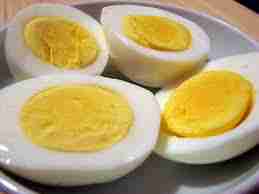 | 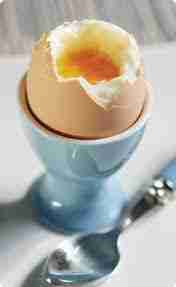 | 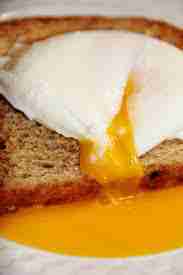 | 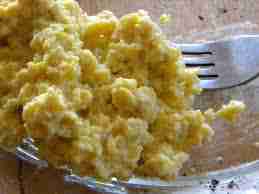 |
| Cook for 10 minutes in boiling water. | Cook for 3 minutes in boiling water. | Crack an egg and cook for 3-5 min. in water at about 80 °C | Fry a whisked egg in a pan. Stir while it is cooking. |
| A sunny-side up egg | An over-easy egg | An over-hard egg | A shirred egg (or baked egg) |
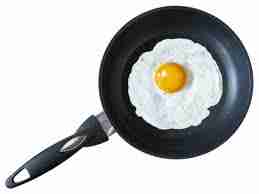 | 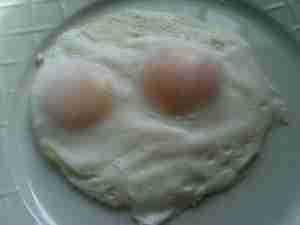 | | 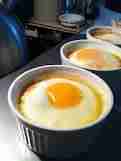 |
| Fry in a pan with yolk left runny. (le jaune reste liquide) | Flip the egg over and fry the other side for a few seconds. | Flip the egg over and fry the second side until the yolk is solid. | Bake the egg into a greased ramekin until the yolk begins to thicken. |
вторник, 12 марта 2019 г.
12.03.2019 (1500)
When you were here before
Couldn't look you in the eye
You're just like an angel
Your skin makes me cry
You float like a feather
In a beautiful world
And I wish I was special
You're so fuckin' special
But I'm a creep, I'm a weirdo.
What the hell am I doing here?
I don't belong here.
She's running… out again
But I'm a creep, I'm a weirdo.
What the hell am I doing here?
I don't belong here.
Most, the most, mostly
We use most with nouns to mean ‘the majority of’
She plays tennis most mornings.
Most tap water is drinkable.
When we are talking about the majority of something in general, we use most + noun. When we are talking about the majority of a specific set of something, we use most of the + noun.
Compare
|
Desserts in general
|
|
A specific set of desserts (at the party)
|
Warning:
When there is no article, demonstrative or possessive pronoun, we don’t usually use of:
There hasn’t been much rain. Most rivers are below their normal levels.
Not:Most of rivers are below their normal levels.
We use most of before geographical names:
[from a weather forecast]
Most of England and Wales should be dry throughout the day
We can leave out the noun with most when the noun is obvious:
[talking about school lunches]
Some children brought a packed lunch but most had a cooked meal in the canteen.(most children)The most
The most is the superlative form of many, much. We use the most with different classes of words.
The most with adjectives and adverbs
We use the most to make the superlative forms of longer adjectives and the majority of adverbs:
They’re using the most advanced technology in the world. (+ adjective)
[the Lake District is an area in Britain]
The most with a noun
We use the most with a noun to mean ‘more/less than all of the others’:
Ian earns the most money in our family.
We can leave out the noun when it is obvious:
He didn’t tell the best jokes but he told the most. (the most jokes)
The most with a verb
We use the most with a verb as an adverb:
https://www.learnenglishfeelgood.com/esl-more-most-themost1.htm
track 1.7 1.8
https://www.youtube.com/watch?v=4_N7U647VQs
Подписаться на:
Сообщения (Atom)